
| Cancer... There's Hope
Chapter 1 |
About
Preface Answers
Centers Epilogue Authors Glossary Chapter: 1 2 34 5 67 8 910 11 1213 14 |
|
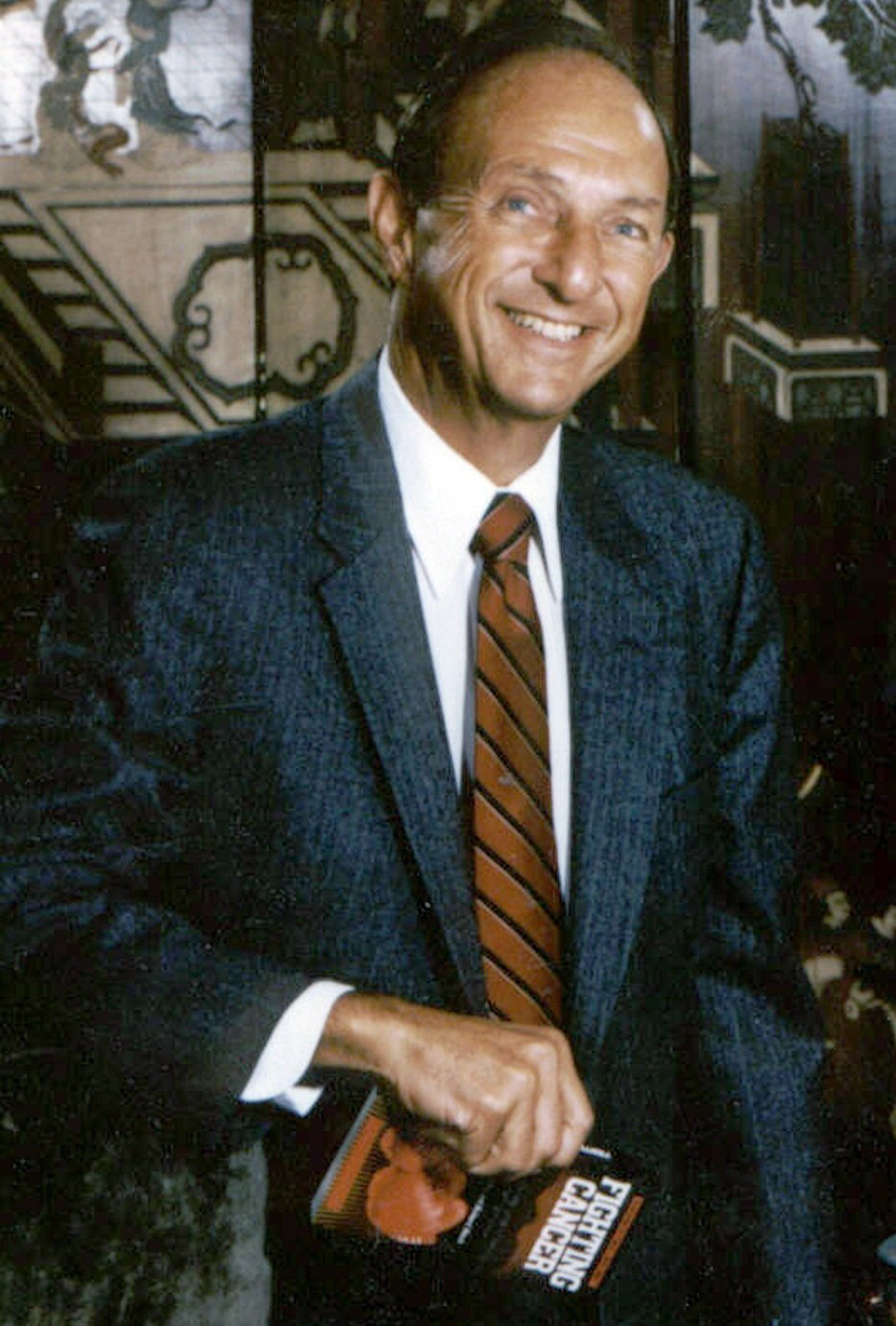
On March 28, 1978, the doctor told me that I had a malignancy. My lung cancer was inoperable. I should get my estate in order. Two years later, the doctors told me I was totally cured. I have no more chance of a recurrence of lung cancer than anyone else on the street. This book is being written for the benefit of any individual who has been diagnosed as having cancer or who has a friend or relative who has cancer. It will attempt to explain different stages and treatments of the disease as seen through the eyes of one who has gone through it. It is not a series of medical stories. Everything in it is from personal experience. These are my feelings about, or my understanding of, what was happening. It is my hope that there is something here that everyone will be able to relate to. Nothing is intended to be used as a comparison, because every case of cancer is different. Not only are there different types of cancers, but they are in different places, happening to people of different. ages, of different backgrounds and of different strengths and weaknesses. Each case of cancer is as unique as a fingerprint. The reader should be able to better understand and empathize with what the person with a malignancy is going through and what that person can do to help himself. It is to show how important is good medical attention, how vital is prompt action, and how fundamental is a positive mental attitude. Cancer is the uncontrolled growth of cells. Cancer cells are extremely small. One million cancer cells would be the size of the head of a pin. One billion, that is 1,000 million, would be the size of a small marble. These cells are weaker than healthy cells, but gain their strength because they multiply so readily. There are six possible fundamental treatments or therapies used to cure cancer. They may be used individually or in any combination. They are: • Surgery. The simple act of cutting out the tumor. • Radiation therapy. Killing cancer cells with X rays. • Chemotherapy. The use of chemicals to kill cancer cells. • Immunization therapy. The use of chemicals to activate the body’s own immune system to kill cancer cells. • Heat therapy. Killing cancer cells by localized heat. • Psychotherapy. The controlled use of the mind to kill cancer cells and stir up the immune system to kill cancer cells. Surgery, radiation and heat therapy are localized approaches. They deal with a specific locale of cancer and are effective against large masses. On the other hand, chemotherapy, immunization therapy and psychotherapy are systemic approaches. That is, they go throughout the entire system. They are possibly less effective against a large localized mass, but will destroy cancer cells in small quantities throughout the body. For this reason, it is generally best to use one or more of the localized treatments to eliminate the mass and then follow up with one or more of the systemic therapies to ensure that all traces of cancer have been destroyed. Since cancer multiplies geometrically (one cancer cell divides into two, two divide into four, four into eight, and so on), it is obvious why it is so important to discover it as early as possible and then treat it immediately. Don’t ever look back and criticize yourself because you didn’t discover it earlier. Once it is discovered, it is important to treat it properly and promptly. One day’s delay could mean the difference between life and death. Radiation and certain chemicals can be given to the body only in limited amounts. Certain kinds of surgery cannot be repeated. For example, you can only remove one lung one time; you cannot have the second lung removed and live. Therefore, it is often critical that the cancer be totally cured the first time, as there is no hope of successfully treating certain kinds of recurrences. An interesting related example was explained to me by a doctor. They found that a certain type of leukemia always went into remission on its own. It then recurred and was fatal. But by taking bone marrow from the patient during this universal remission, freezing it and then injecting it back into the same patient when the leukemia recurred, the doctors usually cured the patient. In my personal case, I attribute my recovery to five factors: • The total support and devotion of my wife and my children; they gave me the will to fight. • Finding the right teams of doctors. I must be grateful, not only to the doctors who properly treated me, but to all those who devoted themselves to discovering the treatments that were used on me. • Positive mental attitude. Once the initial shock was over, I knew I had to make it and would do anything to accomplish this. • Luck. The fact that the tumor formed around a nerve drove me to seek additional opinions. • Faith in God. My prayers and the prayers of so many others which meant so much to me had to be a factor. |